
TN 4.01_C Chemical Resistance of Polyethylene and Elastomers
Filename:
TN 4.01_C Chemical Resistance of Polyethylene and Elastomers.pdf
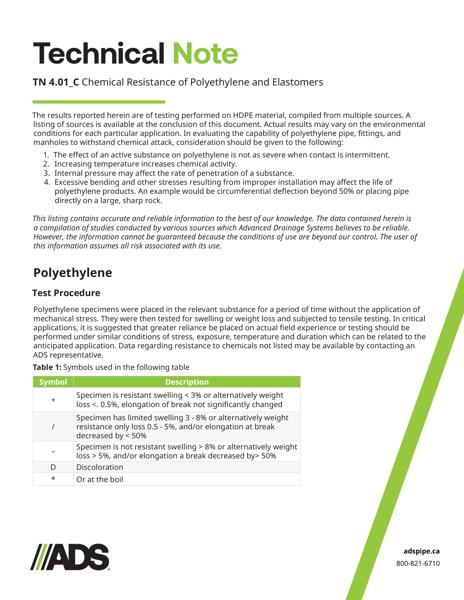
This document is the TN 4.01_C Chemical Resistance of Polyethylene and Elastomers. Test procedures for both with symbol table and chemical substance table.
Testing was performed on HDPE material, compiled from multiple sources. Actual results may vary on the environmental conditions for each particular application. In evaluating the capability of polyethylene pipe, fittings, and manholes to withstand chemical attack, consideration should be given to the following:
1. The effect of an active substance on polyethylene is not as severe when contact is intermittent.
2. Increasing temperature increases chemical activity.
3. Internal pressure may affect the rate of penetration of a substance.
4. Excessive bending and other stresses resulting from improper installation may affect the life of polyethylene products. An example would be circumferential deflection beyond 50% or placing pipe directly on a large, sharp rock.
Polyethylene specimens were placed in the relevant substance for a period of time without the application of mechanical stress. They were then tested for swelling or weight loss and subjected to tensile testing. In critical applications, it is suggested that greater reliance be placed on actual field experience or testing should be performed under similar conditions of stress, exposure, temperature and duration which can be related to the anticipated application. A symbol table is provided. The chemical table for Polyethylene lists substance and concentrations.
The criteria for the ratings of various elastomers presented here (Natural Rubber, SBR, and EPDM) were primarily volume swell resistance, compression set resistance, and aging resistance. The ratings were developed from specific data or general agreement of the sources identified. Several important factors must be considered in the use of rubber parts in service, including:
1. The Temperature of Service: Greater temperatures increase the effect of all chemicals on polymers. The affect of the temperature varies with the polymer and the chemical.
2. Conditions of Service: A compound that swells badly might still function well as a static seal yet fail in dynamic applications.